
Agricultural aviation is hard on airplanes.
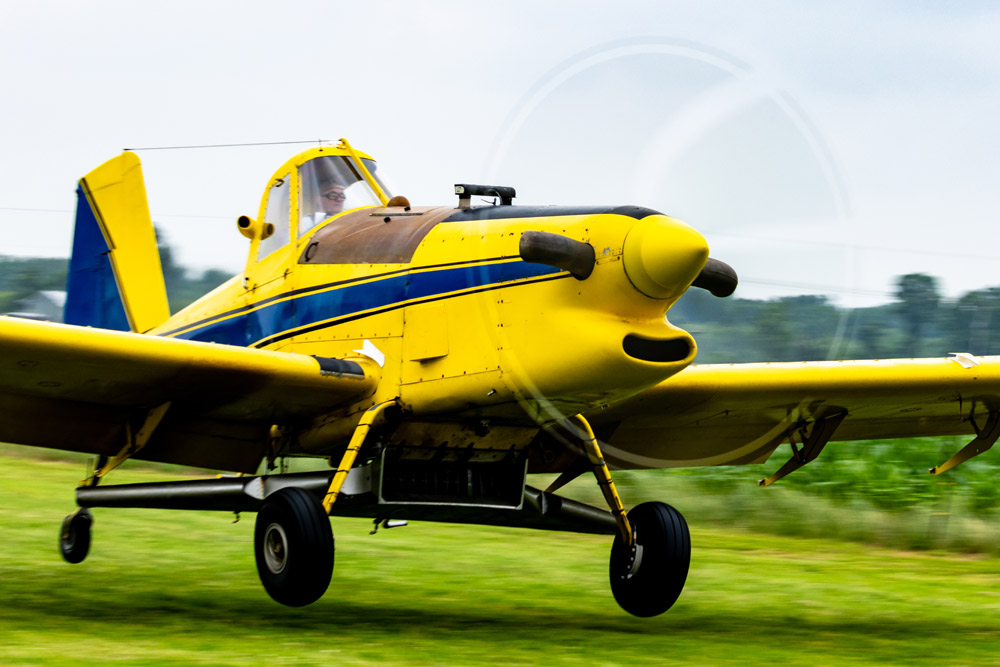
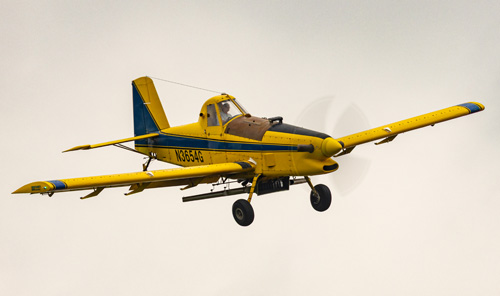
That point was driven home during a recent conversation at the National Agricultural Aviation Association show. While talking with Ag pilots about LED lighting upgrades, we heard something that stopped us in our tracks: broken, cracked, and damaged nav/strobe lenses on aircraft wingtips are not unusual in this line of work.
The cause? In many cases, contact with tree limbs.
For pilots flying spray runs, working close to obstacles, and operating day after day in demanding environments, that detail says a lot. These aircraft are not pampered hangar queens. They are working machines, flown by men and women who accept a level of operational risk most pilots rarely experience.
And while a broken wingtip or tail light lens may seem like a small problem compared to the bigger demands of agricultural flying, it matters.
The Light Is Only As Good As The Lens In Front Of It
One of the biggest reasons aircraft owners upgrade to LED navigation, position, and anti-collision lighting is simple: they want to be seen.
LED lighting offers a major improvement in visibility, reliability, and electrical efficiency over many older lighting systems. But even the best LED assembly still depends on the condition of the lens in front of it.
A scuffed, cracked, clouded, or abraded aircraft light lens can reduce the effectiveness of the light assembly by interfering with how the light is projected. Instead of clean, bright, properly distributed light, a damaged lens can scatter, dull, or distort the output.
That matters on the wingtip.
It matters on the tail.
And it matters even more on aircraft that operate close to the ground, near obstacles, around other aircraft, and in demanding visibility conditions. If the goal of an LED upgrade is to make the aircraft easier to see, then keeping the lenses in good condition is not cosmetic. It is part of maintaining the performance of the system.
Why Replaceable Lenses Matter
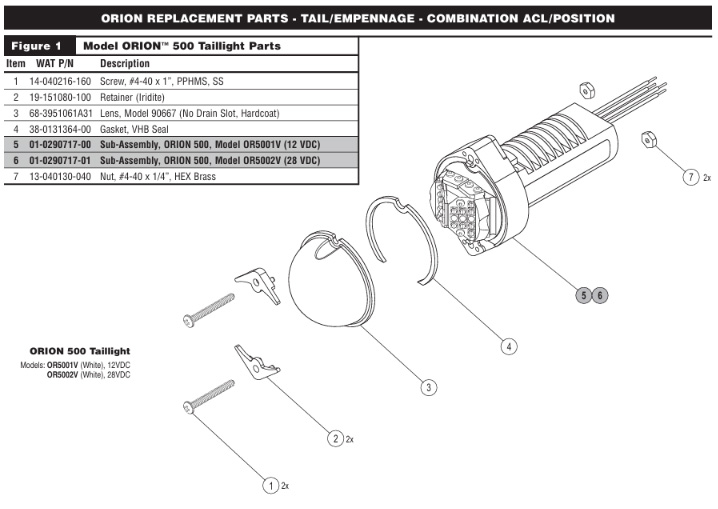
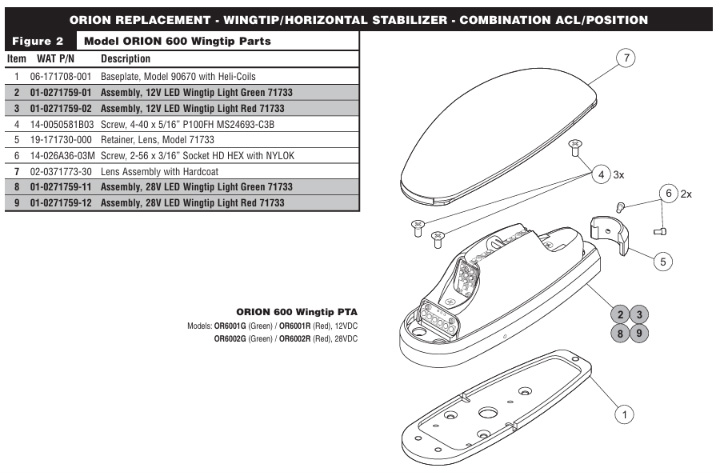
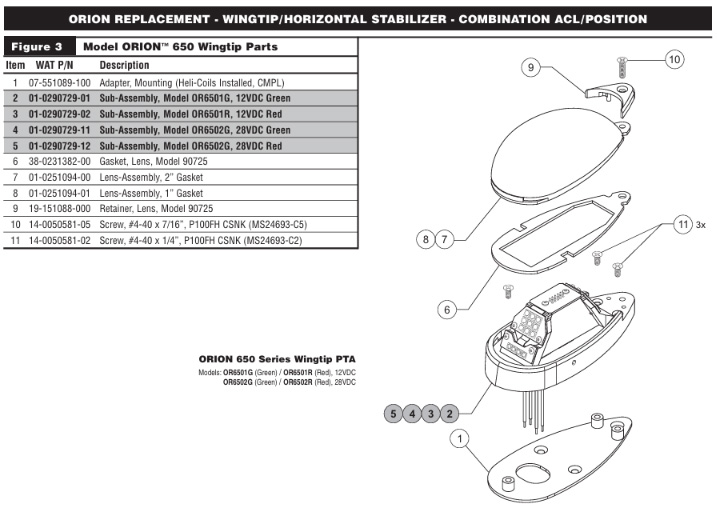
This is one of the practical advantages of the Whelen Aerospace Technologies OR600 and OR650 LED assemblies.
The OR600 and OR650 were built with serviceability in mind. When a wingtip or tail lens is damaged, the entire light assembly does not necessarily have to be replaced. In many cases, the aircraft light lens itself can be replaced.
That is a big difference.
On some lighting products, damage to the outer lens can mean replacing the complete assembly. That can turn a tree-limb strike, hangar rash, ramp damage, or tail contact into a several-hundred-dollar repair.
With the WAT OR600 and OR650 assemblies, a damaged lens may be solved with a replacement lens instead of a complete replacement light. Depending on the model and lens, that can mean replacing a roughly $25–$30 part rather than a complete assembly that may cost several hundred dollars.
For a working aircraft, that matters.
For a fleet, it matters even more.
Wingtip, Tail, Hangar Rash, And Everyday Damage
Not every damaged aircraft light lens comes from agricultural flying. Aircraft lighting lenses live in vulnerable places.
Wingtip lights are exposed to the risks that come with tight hangars, ramp equipment, low-level operations, and close contact with obstacles. Tail lights can also take abuse from hangar movement, handling, towing, ladders, carts, and everyday ramp activity.
Lenses can be damaged by:
- Tree limb contact during low-level operations
- Hangar rash
- Tow bars, carts, ladders, or equipment near the aircraft
- Ramp handling
- Tail contact or accidental impact
- UV exposure and age
- Cleaning abrasion
- Debris impact
The result may be a lens that is cracked, chipped, scratched, cloudy, or worn enough that it no longer lets the light perform the way it should.
It is easy to overlook because the light may still turn on. But “the light turns on” is not the same thing as “the light is performing as intended.”
A Simple Preflight Question
During preflight, it is worth taking a closer look at the wingtip and tail light lenses. Ask yourself:
- Does the lens still look clear?
- Are there cracks or chips?
- Is the surface heavily scratched or clouded?
- Is the lens secure?
- Does the light output look clean and bright?
If the answer is no, it may be time to replace the lens.
For aircraft equipped with Whelen Aerospace Technologies OR600 or OR650 LED assemblies, replacing a damaged lens can be a simple, cost-effective way to restore the performance of the light without replacing the entire assembly.
Protect The Value Of Your LED Upgrade
LED lighting is often purchased for visibility. The aircraft owner wants to be seen in the pattern, on final, in busy airspace, around other traffic, and in demanding operating environments.
A damaged lens works against that investment.
The LED assembly may still be doing its job electrically, but the lens is part of the optical system. If it is cracked, scuffed, clouded, or abraded, the light output reaching the outside world may not be what it should be.
Replacing a damaged lens is not just about appearance. It is about preserving the performance you paid for when you upgraded to LED lighting in the first place.
Replacement Lenses For WAT OR600 And OR650 Assemblies
If your aircraft is equipped with Whelen Aerospace Technologies OR600 or OR650 LED light assemblies, replacement lenses are available for both wingtip and tail applications.
Instead of replacing the entire light assembly for lens damage, you may be able to replace only the lens and get the light back to performing as intended.
That is a practical advantage for any aircraft owner.
For agricultural operators, flight schools, fleet operators, and anyone else flying aircraft that work for a living, it can also be a meaningful cost savings over time.
Not sure which lens you need? Contact Aero-Mach Wilco and we can help identify the correct replacement lens for your WAT OR600 or OR650 assembly.
Call (800) 767-7593 or fill out the contact form to reach our team directly.