
EAA AirVenture gives us plenty to talk about every year. First, it is the Fisk arrival, then it is the critiques of the landings. Next come the afternoon airshows and the endless variety of airplanes parked across Wittman Regional Airport. Then there is the TRAFFIC!
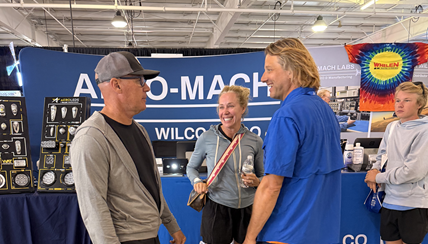
But the most useful hours of our week at EAA AirVenture Oshkosh 2026 were quieter than that. They happened inside the booth, one owner at a time.
What made those conversations valuable was how specific they were. Nobody walked up and asked what was new. They asked how a product applied to the airplane they actually fly: a 1976 182P, a 2005 Mirage, a Cardinal with a battery that wouldn’t hold a charge. And the conversations didn’t end when the owners and airplanes left. The emails that arrived the following week picked up where the booth left off, usually with more detail than we got in person.
Four subjects came up again and again. Here’s what owners were asking, and what we told them.
How Long Should an Aircraft Battery Last?
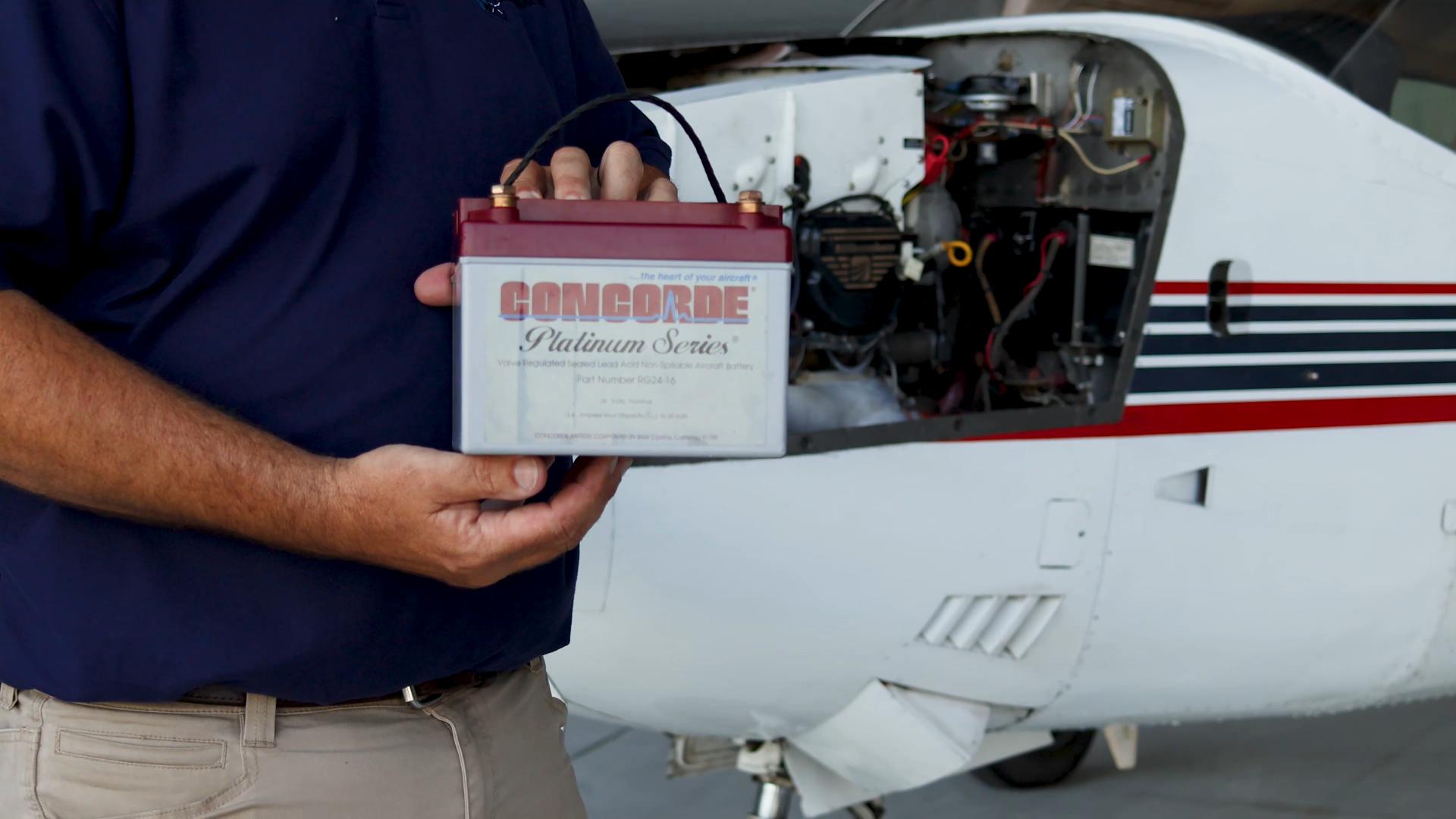
This was the most common aircraft battery maintenance question we heard, and it almost never had a clean answer, because calendar age is one of the weaker predictors of battery condition.
Owners wanted to compare notes on the service life they were getting from Concorde aircraft batteries, particularly when paired with a Concorde-specific BatteryMINDer. From there the conversation usually moved to testing: when to do it, what the numbers mean, and how to spot a weakening battery before it strands someone on a ramp.
The short version:
Capacity, not cranking, is the measurement that matters. A battery can still spin the starter while delivering well below its rated capacity, which is exactly the situation you don’t want after an alternator failure. FAA Advisory Circular AC 43.13-2B treats a battery as airworthy at 80% of its C1 capacity, the figure airframe manufacturers generally use to certify minimum emergency run time, typically 30 or 60 minutes. Concorde sets its return-to-service threshold higher, at 85%, and does it deliberately: the 5% margin is a buffer so the battery doesn’t drop below airworthy before its next capacity check. Gill and most other manufacturers use 80%. Know which standard applies to what’s installed in your airplane, and check the component maintenance manual for your part number. Don’t assume it matches the last airplane you owned.
Test on a schedule, not on a hunch. Concorde calls for an initial capacity test at two years, then annually. Gill wants one at a year and every six months after that. One detail owners routinely miss: if a Concorde battery tests below 85% and needs a conditioning charge to pass, that shortened test interval stays in effect for the rest of the battery’s life. It doesn’t reset.
Watch for the early indicators. Slower cranking on the same engine in the same weather. A battery that needs recharging after routine ground runs. Rising internal resistance. Case swelling, terminal corrosion, or any evidence of electrolyte on a sealed battery. Any of these is a reason to test rather than wait.
How the airplane is flown matters as much as how the battery is built. A lot of general aviation airplanes sit for weeks between flights, then take a high starting load followed by a short hop that never fully replaces what the start consumed. Add seasonal inactivity and a hangar that swings 60 degrees between January and July, and state of charge between flights becomes one of the few variables an owner genuinely controls. That’s the case for a maintainer.
The goal isn’t to make a battery last forever. It’s to know its condition, maintain it to the manufacturer’s guidance, and make the replacement decision on your schedule instead of the airplane’s.
Can I Add Wig-Wag to My Airplane?
Our LED aircraft lighting conversations showed the biggest change of any category.
Years ago the standard question was is it brighter? That question is settled. Owners have decided. Now they’re asking about current draw, existing wiring, connectors, power supplies, pulse functions, approval basis, and how new lighting will interact with what’s already installed.
The conversation around LED lighting has matured. Owners are no longer asking whether an LED is brighter. They’re asking whether it’s the right solution for the aircraft, the mission, the electrical system, and the installation.
Two post-show emails made the point.
The first came from the owner of a 2005 Piper PA-46-350P Mirage who left AirVenture with two WAT Orion 6002 wingtip lights and a 71560 LED ground-recognition beacon. He wasn’t asking whether to convert. He’d already bought. His Mirage had LED taxi lights installed under an existing STC, replacing a system that had provided a pulse function, and he wanted to know whether that capability could be retained, whether the legacy power supply could come out, and how to handle the connections.
The second came from the owner of a 1976 Cessna 182P already flying Aero-Mach LED STCs across navigation, beacon, strobe, landing, and taxi lights. His question: is there an approved path to make the nose landing and taxi lights pulse, or “wig-wag”?
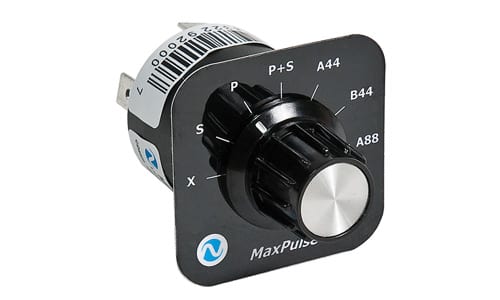
These are application questions, not product questions, and the answer to both starts in the same place. Four things determine whether a pulse or wig-wag installation is workable on a given airplane:
- Which lights. Landing and taxi lights are the normal candidates. Position lights are required to be steady-burning, and anti-collision lights have a defined flash rate. Neither is available to repurpose as a pulse circuit.
- The approval basis. Is there an STC covering the pulse system, and does the Approved Model List include your make, model, and serial number? An STC that covers a 182P doesn’t automatically cover a 182Q. Fortunately for both owners, the Seaton Engineering MaxPulse unit is certified for most GA aircraft.
- What’s already installed. Prior STCs, existing power supplies, and legacy flashers can either simplify the job or conflict with it. This is where serial number and installed-equipment history stop being paperwork and start being the whole answer.
- The electrical side. Current draw, circuit protection, and switch position all need to work with the pulse system, not just the light.
If you’re weighing this on your own airplane, send us the make, model, serial number, and a list of what’s currently installed. That’s what turns a general answer into a specific one.
Some of the owners who attended EAA AirVenture Oshkosh 2026 had watched our July 9 webinar on modern LED lighting upgrades before following up, which is exactly what technical education should do. A good webinar doesn’t answer every installation question. It gives an owner enough grounding to ask a better one about their airplane.
If you missed it, the recording is here: Modern LED Lighting Upgrades webinar
Availability Matters, but Accuracy Matters First
Oshkosh also delivered a practical reminder about aircraft parts availability.
Matt Farrell, Aero-Mach Wilco’s Director of Marketing, spoke to the Cardinal Flyers Organization at its annual Oshkosh luncheon. During the event an owner needed a replacement battery, and Matt confirmed the Concorde RG-35AXC was in stock and arranged shipment to the maintenance facility at the owner’s home airport.
Small moment, but it captures something distributors deal with daily.
Availability matters, but accuracy matters first. Shipping the wrong component quickly doesn’t solve an AOG, it only makes it worse.
-Matt Farrell, Aero-Mach Director of Marketing
Good distribution needs both. Inventory alone isn’t enough. The customer also needs confidence that what ships is right for the aircraft and the application. That gets harder as the fleet ages. Airplanes accumulate modifications over four decades. Product lines change, part numbers supersede, new alternatives arrive, and approval basis varies by installation. “I need a battery for my airplane” often requires several more questions before the right answer is obvious.
Speed has value. Getting it right has more.
Why Aircraft Parts Costs Keep Climbing
Cost was the fourth recurring subject at Oshkosh 2026, and it deserves a straight answer rather than a defensive one.
Aircraft parts cost is genuinely rising, and aviation manufacturing has structural reasons for it. Production volumes are low. Manufacturers carry engineering, quality systems, regulatory compliance, documentation, traceability, product support, and liability across a small unit base. Materials, labor, and freight have all moved.
Those costs are real. So is the effect on the owner. Parts increases don’t land in isolation. Owners are absorbing them alongside maintenance labor, insurance, hangar, fuel, and training. An increase that looks defensible from one supplier’s spreadsheet looks different stacked against total cost of ownership.
We’ve also watched ownership change within the supplier base. Three product lines we distribute have been acquired by private-equity-backed organizations in recent years, and each has since raised prices. We’re not going to claim the acquisitions caused the increases. Pricing reflects many inputs, and every manufacturer’s situation differs. But owners notice sequences, and the concern we heard at the booth is a fair one to raise.
What owners can reasonably ask for is transparency: advance notice of increases, clear supersession information, and honest lead times. What manufacturers reasonably need is a business that can support specialized, low-volume products across decades. Both of those have to hold for the general aviation aftermarket to stay healthy, and for ownership to stay economically viable at all.
What We Carry Back to Our Vendors

Some of the most useful conversations at Oshkosh weren’t with customers. They were with our manufacturers.
Many of the questions reaching our booth were reaching them too: installation details, application questions, product transitions, availability concerns, requests for capabilities that don’t exist yet. That overlap is worth something, because a distributor sits in a position neither the manufacturer nor the owner occupies. We hear from individual owners, A&P mechanics, maintenance shops, flying clubs, and professional operators across dozens of aircraft types.
Over time, patterns emerge. When several customers hit the same installation issue, that’s data. When shops repeatedly ask for the same clarification, that’s data. When owners across multiple type clubs start asking about pulsing LEDs, that’s data too, and it travels back upstream into documentation, training, inventory planning, and sometimes product development.
Distribution usually gets described in terms of logistics: inventory, warehouses, purchase orders, fulfillment. All essential. But the information moving through the aviation supply chain is close to as important as the parts moving through it.
The Question That Arrives the Following Week
It’s easy to measure an AirVenture exhibit by booth traffic. How many people stopped, how many products were discussed, how many leads were generated. Those numbers have their place, but they miss most of it.
The better question is what happened after everyone went home.
Did an owner leave understanding how to test a battery instead of guessing at it? Did a pilot learn that an LED conversion is more than picking the brightest bulb? Did a shop get the correct component rather than the fastest one? Did a manufacturer’s technical team learn something from a question the field keeps asking?
Sometimes the most valuable question we hear at Oshkosh isn’t the one we answer in the booth. It’s the one that shows up in our inbox the following week.
Working through a battery decision, a lighting upgrade, or an approval question on your airplane? Call us at 1-800-767 7593 or email us at Sales@wilco.to with your make, model, and serial number, and we’ll work the application with you.
Reference documents
- Concorde Battery, RG Series Aircraft Battery Owner/Operator Manual, Document 5-0324
- Concorde Battery, RG Series Main Aircraft Battery Component Maintenance Manual, Document 5-0171
- FAA Advisory Circular AC 43.13-2B, Acceptable Methods, Techniques, and Practices – Aircraft Alterations
Concorde revises its manuals periodically. Always work from the current revision published on Concorde’s website.