
Aero-Mach TCO
Static Dischargers for Piston and Turbine AircraftAircraft Static Discharger Manufacturing You Can Trust
Aero-Mach TCO specializes in the design and manufacturing of static dischargers used on piston and turbine aircraft.
As part of the Aero-Mach family of companies, Aero-Mach TCO provides rigorously tested static discharge products trusted for their reliability, performance and FAA credentials.
-
Unrivaled Expertise
With decades of experience manufacturing aircraft static dischargers, TCO delivers proven solutions to aircraft manufacturers, suppliers, operators, and maintenance organizations worldwide.
-
AS9100-Certified Quality
Our AS9100-certified quality management system supports consistent manufacturing, documented processes, rigorous traceability, and continuous improvement throughout our operations.
-
Engineered Performance
TCO static dischargers are designed to provide reliable electrostatic discharge, reduce radio-frequency interference, and support dependable aircraft communications and navigation performance.
-
Industry Compliance
TCO is qualified to manufacture static dischargers in accordance with MIL-D-9129D, which establishes general requirements for aircraft electrostatic dischargers.

Why Choose Aero-Mach TCO?
In Stock, Ready to Ship
Most Aero-Mach TCO static dischargers are ready for immediate shipment.
Built for Reliability
Designed to meet the rigorous standards of GA and turbine aircraft.
Easy Replacement
Designed to be easily installed as direct replacements for OEM dischargers.
Trusted Aviation Expertise
More than 50 years of experience in aviation component manufacturing.
Industry Insights
How to Inspect an Aircraft Static Wick: Wear, Damage, and Replacement Signs
July 29, 2026
Two static wicks sit side by side on a workbench. One ends in a scruffy, brush-like tuft of exposed fibers. The other is smooth, clean, almost polished. Most people would replace the frayed one and reinstall the clean one. Most people would be wrong.
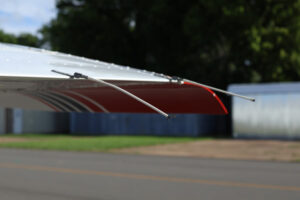
What Is an Aircraft Static Wick—and How Does It Reduce Interference?
July 29, 2026
A pilot enters light snow and hears a faint hiss begin to build in the headset. Minutes later, the noise is competing with incoming radio calls...
Static Dischargers Designed to Meet Your Needs
Potted, Shielded Design
Our static dischargers are potted and shielded to protect against interference.
Stainless & Nickel-Plated Steel
Built to withstand harsh environmental conditions and corrosion.
Available for Purchase Through Aero-Mach Wilco

The Aero-Mach TCO Difference
Our products are trusted by OEMs, maintenance organizations, and aircraft owners who rely on consistent performance, long service life, and straightforward installation. Every component is built with a focus on reliability, repeatability, and long-term support.
From Legacy to Modernized Design
Early aircraft were delivered with one-piece static dischargers riveted directly to control surfaces. Aero-Mach TCO’s two-piece design allows the mounting base to remain installed while the discharge element can be easily replaced – reducing labor, minimizing downtime, and improving long-term serviceability.
Industry Compliance
We are fully qualified to comply with MIL-D-9129D, covering the general requirements for aircraft electrostatic dischargers.
Other Aero-Mach Divisions

Aero-Mach Labs: Manufacturing & MRO
Our Aero-Mach Labs division provides FAA-Certified instrument and accessory repair solutions with precision and consistency in an industry where compliance is key to safety in the air. Look to us for your aircraft instrument repair and fuel system component maintenance and overhaul.
If you need sustaining engineering and obsolescence management, look to Aero-Mach Labs for contract manufacturing projects so your team can focus on higher-value work.

Aero-Mach Wilco: Aircraft Parts Distributors
Need replacement brakes or brand-new LED lighting for your aircraft? Look to aerospace parts distributors like our Aero-Mach Wilco division.
Aero-Mach Wilco sells a wide inventory of Omega brakes, Whelen LED lighting, PM Research erosion protection boots, Lamar alternator controls, etc. We prioritize fast, same-day shipping so you can get back up in the air and keep flying!
Frequently Asked Questions (FAQ) About Static Wicks
What is a Static Discharger?
Static dischargers are mounted along the trailing edges of an aircraft’s wings and tail and are designed to safely dissipate static electricity in flight. As an aircraft moves through the atmosphere, it naturally builds an electrical charge from friction and environmental conditions.
If that charge is not managed, it will discharge from random points across the airframe, creating unstable electrical activity that can show up as radio interference or reduced communication clarity. Sometimes, it even appears as a blue glow called “St Elmo’s Fire”.
How Do Static Dischargers Work?
As a charge builds during flight, the electrical field naturally becomes strongest at sharp points. Static dischargers take advantage of this and concentrate the field at their tips, which allows the surrounding air to ionize and begin shedding charge as soon as that threshold is reached.
This process – called “corona discharge” – creates a steady, continuous flow of energy off the aircraft rather than intermittent bursts from random points like antennas or edges. As a result, radio and navigation performance is improved, especially in precipitation or electrically active environments.
In addition, aircraft static wick placement along the trailing edges aligns them with airflow and promotes efficient discharge with minimal aerodynamic impact.
What About Static Wick Testing and Maintenance?
Static wicks only work when they’re intact and properly bonded to the aircraft. Inspection typically begins with a visual check. Each wick should be present, securely attached, and free of obvious damage. The fibrous tip should not be burned, heavily frayed, or missing, and the base should be tight with no signs of corrosion or looseness. Missing or damaged wicks are one of the most common causes of in-flight radio static.
Beyond visual condition, electrical continuity is important. A static wick must have a reliable conductive path to the airframe to do its job. Using a multimeter, maintenance personnel can verify continuity between the wick and the aircraft structure. High resistance or an open circuit indicates poor bonding, contamination, or internal failure of the wick, any of which can prevent effective discharge.
Inspection should also consider overall coverage. Wicks are installed in specific locations along trailing edges to create a balanced discharge pattern. If one or more are missing, the system becomes less effective, and electro static discharge may shift to less ideal points on the aircraft.
As a practical rule, if a wick is damaged, loose, or missing, it should be replaced – not repaired – to restore proper performance and maintain reliable avionics operation.
TCO Manufacturing Parts
Discharger/Base | Similar To | Base/Holder |
101-380053-11 | ||
101-380053-9 | TID-1 W | |
B-1 Base | ||
B-10 Base | ||
B-4 Base | HS-5689-3 / C592001-0205 | |
C592001-0201 | None | |
C592001-0202 | None | |
C592001-0203 | ||
C592001-0205 | ||
C592001-206 | ||
DD-1 | ||
DD-1 (W) | 101-380053-11 C592001-0203 | |
DD-2 | ||
DD-2 (W) | C592001-0206 | |
DD-3 | HS 5689-2 | |
ESD-1 | C592001-0201 | None |
ESD-3 | C592001-0202 | None |
None | ||
HS5689-1 | RID-2 | |
HS5689-2 | DD-3 | |
HS5689-3 | ||
RID-2 | HS5689-1 | |
We’re Ready to Help
Partner with Aero-Mach TCO to protect your aircraft, enhance performance, and minimize interference.
Trusted by Prominent Industry Leaders
When it comes to electrostatic dischargers, the aviation industry’s most prominent manufacturers, suppliers, and operators turn to TCO for reliable solutions. Some of our esteemed customers include: